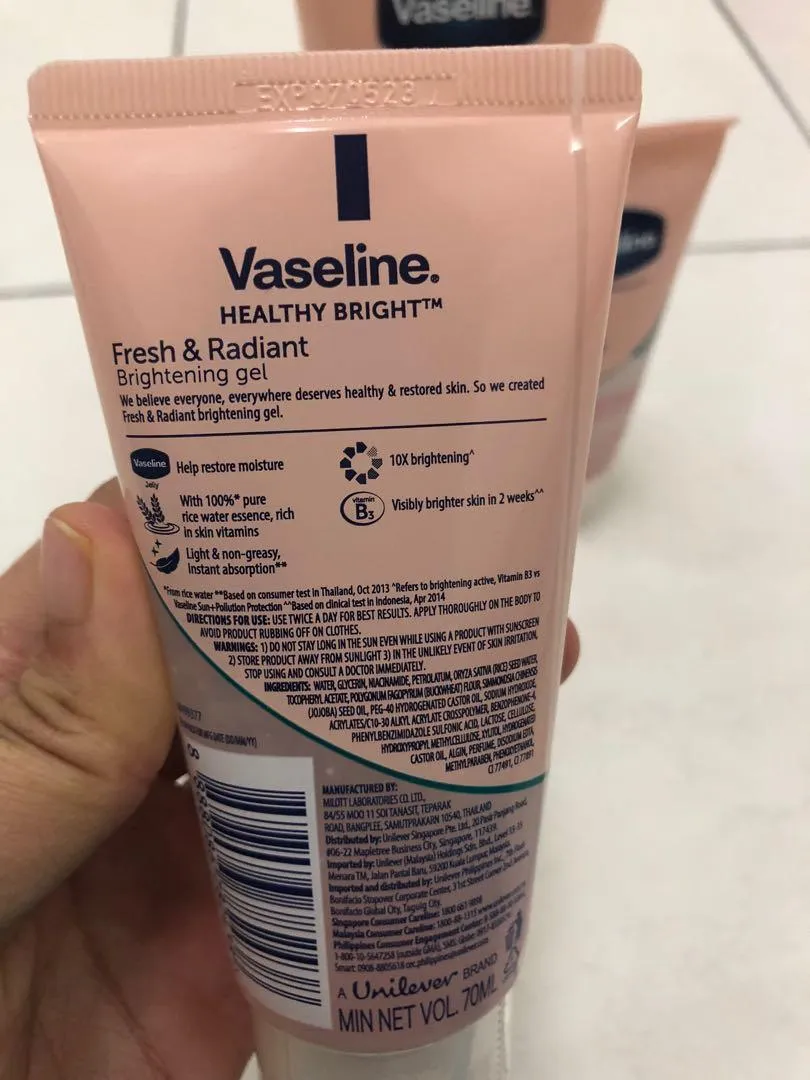
What is Vaseline?
Vaseline, also known as petroleum jelly, is a common household product with a wide range of uses. It’s a semi-solid mixture of hydrocarbons, primarily derived from petroleum. This substance is renowned for its moisturizing and protective properties, making it a staple in skincare routines worldwide. Its origins trace back to the oil fields, where workers noticed a waxy substance coating the oil rigs. They soon discovered that this substance could heal cuts and burns, and thus, the concept of Vaseline was born. Its affordability and accessibility have cemented its place as a versatile product for various skin conditions.
The Composition of Vaseline
The primary component of Vaseline is a blend of mineral oils and waxes, creating a barrier that helps to seal in moisture. The exact composition can vary slightly depending on the manufacturing process, but the core elements remain consistent. These ingredients contribute to Vaseline’s ability to provide a protective layer on the skin, preventing water loss and shielding against external irritants. Because of its inert nature, Vaseline is generally considered safe for most skin types, though individuals with specific sensitivities should always conduct a patch test before widespread use. The simplicity of its formulation contributes to its widespread appeal and effectiveness as a basic skincare product.
How Vaseline Works

Vaseline functions primarily by creating a barrier that prevents moisture from escaping the skin. This occlusive effect makes it an excellent choice for treating dry skin, chapped lips, and minor cuts and burns. Unlike moisturizers that contain humectants to draw water into the skin, Vaseline simply locks existing moisture in. It does not actively hydrate the skin, but it prevents dehydration. This characteristic makes it particularly beneficial in harsh environments or during cold weather, when the skin is more susceptible to dryness. Its protective properties are often leveraged to aid in the healing of minor skin injuries.
Vaseline and Teeth Whitening Myths
The idea that Vaseline can whiten teeth is a persistent myth. The belief likely stems from the product’s ability to create a smooth, shiny surface. Some individuals might perceive this as a whitening effect, as the teeth appear brighter when reflecting light. However, Vaseline does not contain any ingredients that can remove stains or alter the natural color of teeth. The appearance of whiter teeth, if any, is purely superficial and temporary, lasting only as long as the Vaseline remains on the teeth. It’s important to be wary of such claims and to understand the science behind effective teeth whitening methods.
Does Vaseline Actually Whiten Teeth?
No, Vaseline does not have the ability to whiten teeth. The ingredients in Vaseline are not designed to interact with tooth enamel or to remove stains. Teeth whitening works by using bleaching agents, such as hydrogen peroxide or carbamide peroxide, to oxidize the stain molecules within the enamel. Vaseline lacks these active ingredients. Applying Vaseline to the teeth can provide a temporary glossy appearance, but it does not change the underlying color of the teeth. Relying on Vaseline for teeth whitening is, therefore, an ineffective approach and will not yield the desired results.
Scientific Evidence on Vaseline for Teeth Whitening

There is no scientific evidence to support the use of Vaseline for teeth whitening. Extensive research has explored various methods for teeth whitening, focusing on the efficacy and safety of different active ingredients. These studies have never included or validated Vaseline as a teeth whitening agent. The lack of scientific backing underscores the fact that Vaseline does not possess the necessary chemical properties to interact with or alter the color of tooth enamel. Dental professionals and scientific literature universally recommend proven methods for teeth whitening, such as professional treatments or dentist-approved over-the-counter products.
Alternative Teeth Whitening Methods
Several effective teeth whitening methods are available. These include professional treatments performed by dentists, such as in-office bleaching, and at-home options like custom-fitted whitening trays and over-the-counter whitening strips. Professional treatments offer the advantage of higher concentrations of bleaching agents and are typically performed under the supervision of a dental professional, which ensures safety and effectiveness. At-home methods, such as whitening strips and toothpastes, contain lower concentrations of bleaching agents and can be used more conveniently. Always consult with a dentist before using any whitening method to ensure it is appropriate for your specific dental needs and to avoid potential side effects.
- Professional Teeth Whitening (in-office bleaching)
- Custom-fitted whitening trays
- Over-the-counter whitening strips
- Whitening toothpastes
Benefits of Professional Teeth Whitening
Professional teeth whitening offers several advantages over DIY methods. Dentists can use stronger bleaching agents, resulting in faster and more noticeable results. They can also assess your oral health and ensure that the whitening treatment is suitable for your teeth. Professional treatments are also conducted in a controlled environment, minimizing the risk of potential side effects, such as tooth sensitivity. Furthermore, professional whitening can address stubborn stains that might not respond to over-the-counter products. Regular dental check-ups and professional cleanings are a great benefit and provide insights into what methods of teeth whitening are appropriate for you.
Risks and Side Effects

While teeth whitening is generally safe, potential side effects can occur. The most common side effect is temporary tooth sensitivity, which usually subsides within a few days after the treatment. Gum irritation can also occur if the bleaching agent comes into contact with the gums. It’s important to follow the instructions provided by your dentist or the product manufacturer to minimize these risks. Individuals with existing dental issues, such as cavities or gum disease, should address those problems before undergoing any whitening treatment. Consulting with a dentist before starting any whitening regimen is highly recommended to ensure safety and achieve the best results. Also, be aware that teeth whitening is not a permanent fix and may require maintenance treatments.
How to Improve Oral Hygiene
Maintaining good oral hygiene is crucial for healthy, white teeth. This involves brushing your teeth at least twice a day with fluoride toothpaste, flossing daily to remove plaque and food particles from between your teeth, and using an antiseptic mouthwash to reduce bacteria. Regular dental check-ups and professional cleanings are also essential for removing plaque and tartar that brushing and flossing cannot remove. Limiting your intake of staining foods and beverages, such as coffee, tea, and red wine, and avoiding tobacco products can also help maintain the whiteness of your teeth. A consistent oral hygiene routine is the foundation of a bright, healthy smile.